1. Be Silent, But Cry Out with Your Life
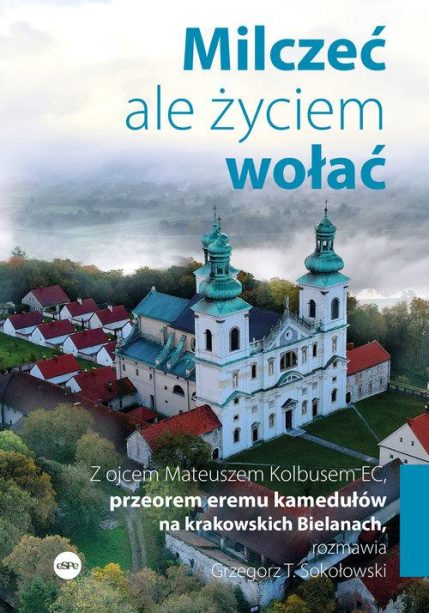 “A person undergoes an inner transformation and increasingly becomes a participant in God’s mystery, and God radiates His presence through him to the whole surroundings. And this is the very essence of mysticism” (Fr. Mateusz Kolbus EC).
Whoever enters Kraków from the western side can see from afar the white towers of the Camaldolese monastery shining in the sun and towering above the city. The monks wearing the characteristic white habit with hood and scapular live in hermitages near the church and lead a strict life in silence and solitude. They begin their day at 3:30 at night, when the monastery bell calls them to the first prayer. The following hours of the day pass for the Camaldolese in work, prayer, reading Holy Scripture and contemplation. Men from outside may enter the monastery only at specified hours, women only on twelve designated days of the year.
Although — out of respect for the monks’ rule — few people have the opportunity to look behind the monastery enclosure, this book is a unique opportunity to learn a great deal about the life of the Kraków Camaldolese, and from none other than their prior himself – Father Mateusz Kolbus EC. It is the only such extensive and sincere interview in which the superior of the hermitage on Silver Mountain speaks, among other things:
- about why some men decide on a life in silence and solitude;
- about the daily life of the Camaldolese;
- about prayer, fasting, the meaning of asceticism and silence;
- about experiences of crisis and the dark night;
- about death and eternal life.
In conversation with Grzegorz Sokołowski, the prior of the Kraków Camaldolese, “slightly opening the door of the hidden world of hermitages, gives us the chance so that the reader invited to the meeting may demythologize in himself the ideas about such a form of life, and at the same time allows, with great delicacy, to feel the breath of true mysticism” (fragment of the introduction).
I sincerely recommend! Everyone especially interested in monastic and contemplative life should read this book.
2. Loneliness Broken – Bp. Erik Varden
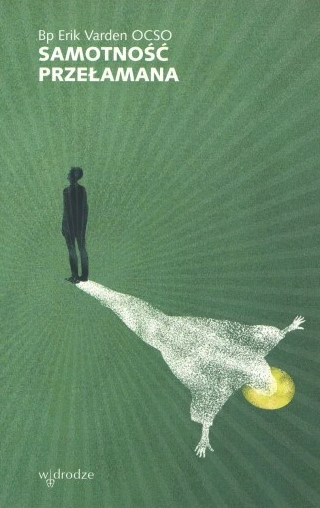 “Loneliness Broken” (orig. The Shattering of Loneliness: On Christian Remembrance) is a deep, contemplative book.
The author takes up the topic of loneliness not as a social problem, but a spiritual one – a state that touches the deepest corners of human existence.
The book is written with extraordinary sensitivity and erudition, combining personal experiences, monastic tradition, Holy Scripture and the works of great spiritual writers. The main thesis of the book is that loneliness can be broken through remembrance – not only remembrance of God, but also the awareness of being remembered by Him. This remembrance restores identity and heals the soul.
It is not an easy read – it requires concentration and openness to deeper reflection. But that is where its strength lies. Varden does not give ready answers, but invites one to a spiritual path that can lead to reconciliation – with God, with oneself and with others.
I recommend reading this book to all seeking deeper meaning in the suffering of loneliness, to people interested in Christian spirituality and to those who value mystical and contemplative literature.
Erik Varden is a Norwegian Catholic cleric, Trappist monk and spiritual writer.
He was born on May 13, 1974 in Norway. After ten years of studies at the University of Cambridge he entered Mount Saint Bernard Abbey in England in 2002. In 2013 he was elected abbot of that abbey.
In 2019 Pope Francis appointed him bishop of Trondheim in Norway, and his episcopal consecration took place on October 3, 2020. As bishop of Trondheim, Varden is the first Norwegian in this position since the time of the Reformation. His nomination and ministry are seen as significant for the Catholic Church in Norway, especially in the context of the growing number of faithful, mainly thanks to immigration from Poland and Lithuania, but also conversions from non-religious environments.
He is also one of the people who appears in the film “Outside the City”, which I have already written about and which I recommend watching.
3. The Power of Silence – Cardinal Robert Sarah
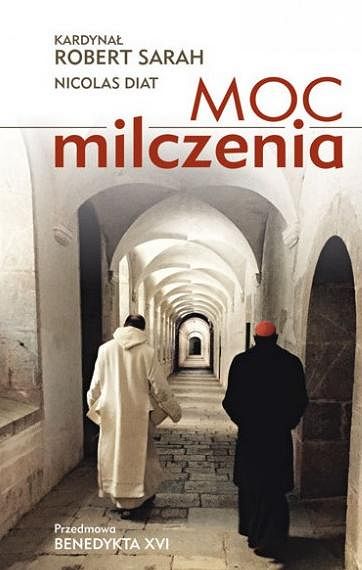 The book The Power of Silence is a unique and profound reflection on the spiritual meaning of silence in a world that is increasingly sinking into noise – both physical and spiritual. Cardinal Robert Sarah, former prefect of the Congregation for Divine Worship and the Discipline of the Sacraments, presents in it not only personal reflections, but also the centuries-old tradition of the Church, showing silence as a path to encounter with God.
1. silence as a spiritual necessity
Sarah shows that silence is not a luxury for hermits, but a necessary condition of authentic spiritual life. A noisy person, immersed in external stimuli and informational chaos, is not able to hear God, who speaks “in a gentle whisper” (1 Kgs 19:12). Silence is the space in which God reveals His word and shapes the soul.
2. contemplation as an antidote to spiritual superficiality
The author critically evaluates the modern world, which has lost the ability for focus, contemplation and depth. Silence – both internal and external – allows one to know the truth about oneself and about God. The cardinal reminds that prayer without silence is empty, and liturgy deprived of recollection becomes merely a spectacle.
3. spiritual and liturgical consequences of noise
Sarah writes not only about the culture of noise in society, but also in the Church – where sometimes an overly loud, external form of liturgy blurs the mystery of the sacred. He defends the need for adoration, silence in the liturgy and deep reverence toward the Eucharist. He criticizes attitudes of superficial pastoral activism that are not born from prayer, but from anxiety and fear of withdrawing from the public stage.
4. monastic inspiration and witness
A large part of the book consists of conversation and reflection inspired by Benedictine spirituality and the witness of the life of Dom Guéranger and Dom Dysmas de Lassus. The author also recalls profound testimonies of saints and mystics who, through silence, entered into communion with God – showing silence as the language of heaven.
5. prophetic message
The Power of Silence is not only a spiritual book, but also a prophetic voice. Cardinal Sarah warns that the noise of the world is a tool that can draw a person away from truth and salvation. Silence, on the other hand, is an act of courage and freedom that allows a person to return to God.
Reading this book leaves no one indifferent – it forces reflection, prayer and… silence. 5/5
4. Sister Faustina Biography of a Saint – Ewa Czaczkowska
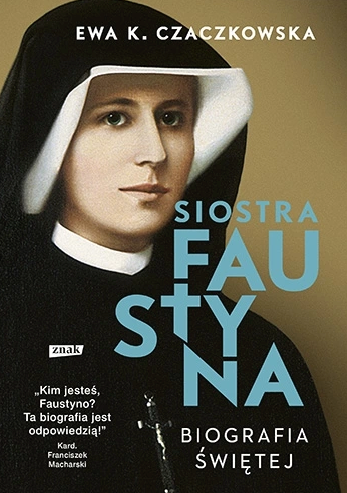 “Sister Faustina. Biography of a Saint” is a solid, well-documented study of the life of St. Faustina Kowalska that goes beyond a superficial presentation of her person and mission. It is a detailed and extensive book aimed both at people spiritually interested in the figure of Faustina and at readers who appreciate historical and biographical contexts.
In the expanded 2020 version of the book, the author supplemented the reading with even more wonderful, lesser-known facts from the life of this well-known saint.
If you care about a deeper understanding of the life and influence of St. Sister Faustina – not only through her own writings, but also through a historical-biographical lens – this book can be a great read for you! Rating 9/10.
 Autor
Autor