 Autor
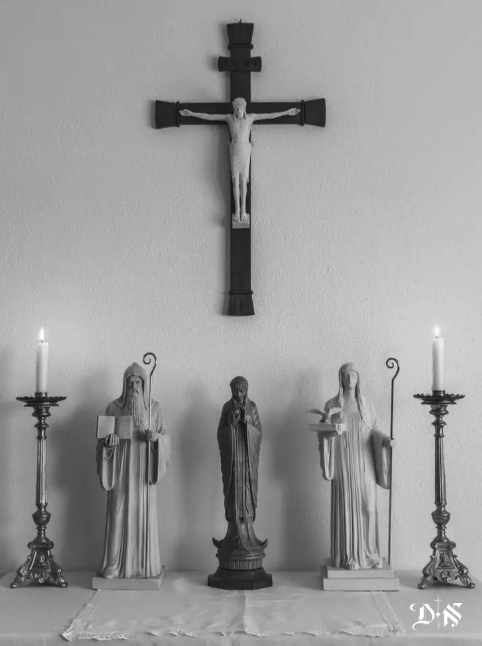
AutorDomestic chapels are small, private altars dedicated to prayer and religious reflection, often adorned with images of saints, crosses, and candles. Although in many cultures and religious traditions having such a space is a common practice, in some social circles it may evoke mixed feelings. Is having a domestic chapel a reason for shame? Let us examine this issue from various perspectives.
Tradition and History
Domestic chapels have a long history in Christian tradition. From ancient times, Christians created places of prayer in their homes where they could meet God in an intimate atmosphere. In the Middle Ages, when churches were sparsely scattered, domestic chapels served as the central place of family religious life. This tradition has endured through centuries, passed down from generation to generation.
Spiritual Significance
For many people, a domestic chapel is an expression of deep faith and spiritual devotion. It is a place where one can pause for a moment of prayer, meditation, or reflection on spiritual life. In the hustle of modern life, having such a space can be extremely valuable, offering a moment of peace and contact with God.
1. Personal Faith:
The domestic chapel is a private space that reflects a personal relationship with God. It can be a symbol of daily spiritual practice and a reminder of the values that are important to us.
2. Family Tradition:
For many families, the chapel is a place of common prayer where parents pass on faith to their children and teach them religious practices. It is an element that builds family bonds and strengthens shared spiritual identity.
Social Perception
In a society that is becoming increasingly diverse in terms of religion and worldview, having a domestic chapel may provoke various reactions. For some, it may be an expression of outdated customs; for others, a witness to deep faith and spiritual identity.
1. Public vs. Private Religiosity: In cultures where religion is mainly practiced publicly, having a domestic chapel may seem less understandable. However, in many places where religious life also has a private dimension, chapels are a natural part of everyday life.
2. Stereotypes and Prejudices: Some people may view domestic chapels through the lens of stereotypes or prejudices, associating them with fanaticism or excessive piety. However, it is important that these personal places of prayer be evaluated through the intentions and significance they hold for their owners.
Contemporary Significance
In today’s world, where spirituality takes various forms, domestic chapels still have their place. They can be symbols of spiritual seeking in a world dominated by materialism and fast pace of life.
1. Spiritual Refuge: In times of crises and spiritual challenges, a domestic chapel can become a refuge, a place where one can find consolation and support.
2. Expression of Identity: For many people, the chapel is an expression of their identity and belonging to a religious tradition. It is a way of manifesting their faith and spiritual convictions in private space.
Having a domestic chapel is not a reason for shame, but an expression of personal faith and spiritual practice. In a world that often promotes materialism and superficial values, domestic chapels can serve as a oasis of peace, reflection, and spiritual support. It is important to remember that everyone has the right to their private spiritual space and to express their faith in a way that is meaningful to them. Domestic chapels are symbols of the enduring tradition and spiritual depth that still have a place in the lives of contemporary people.

 Autor
Autor