 Autor
Autor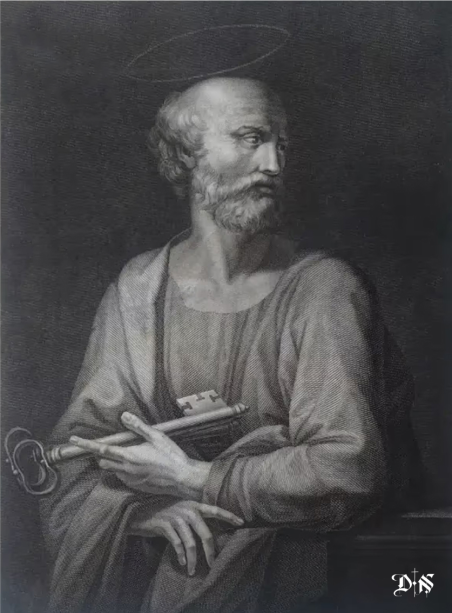 The modern world seems increasingly lost. Technological and material development does not go hand in hand with moral and spiritual growth. It is becoming harder to distinguish truth from falsehood, and good from evil. Many people, even within the Church, succumb to the pressure of public opinion, political correctness, or emotional narratives.
At such a time, the pope cannot be a neutral, “likable,” or merely diplomatic figure. He must be a courageous, resolute, and holy shepherd – a man of the Gospel, not of compromise.
That is why today more than ever, there is a need for a pope who fulfills specific duties inseparably linked to his office.
First – the pope should be the guardian of the deposit of faith.
Catholic faith is neither a human creation nor a set of opinions subject to evolution. The deposit of faith – revelation contained in Scripture and Tradition – was entrusted once and for all, and the pope’s task is not to change it, but to faithfully pass it on. In times when some circles expect the “reformation” of Church teaching on morality, marriage, sacraments, or anthropology, the pope must have the courage to say clearly: Church teaching is not subject to revision under social pressure. Only such a pope deserves the title of successor of St. Peter, who did not deny Christ, but – though weak himself – gave his life for the truth.
Second – the pope should be an outstanding theologian and teacher of the faith.
It is not enough to speak to people in simple language – one must know what one is saying. The pope must know the Gospel, understand dogmas, know the history of the Church, and the works of the Church Fathers. He must be deeply grounded in theology to resist fashionable opinions or superficial emotions. His statements should be precise, consistent, and faithful to Tradition – so as not to cause confusion or be interpreted in a way contrary to the Church’s existing teaching.
Third – the pope must be a firm defender of doctrinal integrity.
In recent decades, attempts to reinterpret Church teaching in the spirit of relativism have been observed. Meanwhile, truth is not negotiable. The pope cannot allow teaching on sin, marriage, priesthood, or the Eucharist to be undermined. He cannot allow situations in which the faithful receive conflicting information about morality or sacramental discipline. Church teaching should lead to salvation – not temporary acceptance by the world.
Fourth – the pope should open the way for dignified celebration of the liturgy in both forms of the Roman Rite.
Liturgy is the heart of the Church. It is not just a form of prayer, but an expression of our faith and worship of God. The pope should strive to restore the profound sacredness of the liturgy – not by exclusion, but by enabling the celebration of the Tridentine Mass, which for centuries has been a source of holiness and spiritual formation. Instead of restricting access to this treasure, he should promote and protect it – as part of the Church’s heritage, not a past to be forgotten.
Fifth – the pope should be uncompromising regarding sin and abuses within the Church.
A major scandal in recent years has been sexual and moral abuses among the clergy, often covered up or trivialized. The pope cannot remain silent or protect the guilty. He must, with full transparency, courage, and humility, stand on the side of the victims, take real cleansing actions, and show that the Church does not accept sin – especially among those who should be its shepherds.
Sixth – the pope should take his office seriously as a sacred duty.
He is not the leader of an organization nor a charismatic speaker – he is the successor of St. Peter, the visible sign of unity and the foundation of faith. His words, gestures, and decisions – everything should testify to service to Christ. He should maintain the dignity of the office, avoiding triviality or banalization of the Pope’s role. His authority does not come from personality, but from the grace of the office entrusted to him by God.
Seventh – the pope should be a father and example of holiness.
It is not enough to talk about God – one must show Him by one’s life. The pope must be a man of prayer, humility, and courage. His life should be a sign of union with Christ. The world looks to the pope as the conscience of the Church – and only one who strives to live the Gospel in truth can proclaim it with power. There cannot be a discrepancy between word and deed.
The pope for today’s times is not the one who wants to please the world, but the one who leads it toward salvation. He does not change Church teaching, but faithfully transmits it. He does not hide sin, but exposes it in truth. He does not weaken the liturgy, but strengthens its sanctity. He does not seek applause, but stands by the cross. This is the pope the modern Church needs – a man of faith and holiness, who does not bow to the spirit of the times, but allows the Holy Spirit to transform the world.
Personally, I would like a conservative-leaning cardinal to be chosen as the successor of St. Peter. The world needs a pope with the courage to restore and defend traditions and values that form the foundation of the Catholic Church.
Currently, by my calculations, there are only 18 conservative cardinals among the 133 cardinals eligible to vote in a conclave.
Why do I think a conservative pope is needed today?
As an average Catholic, I am somewhat disillusioned by the constant confusion caused to believers by the lack of adherence to traditional Church teaching, by ambiguities, and casually spoken words often on essential matters.
I expect from the person holding the highest office in the Church:
- Faithfulness to tradition, including caution toward theological novelties or doctrinal changes,
- Defense of moral teaching,
- Respect for liturgical tradition and restoration of the Tridentine Mass for those who wish to participate, from which many saints arose over the centuries,
- Caution in following worldly changes and distance from modern ideologies,
- Resistance to pressure groups,
- Seriousness related to the office, which does not mean rigidity or lack of a sense of humor.
I remember the times when one awaited the Angelus from the Vatican with John Paul II every Sunday with longing. I would like, again, after two pontificates, to eagerly look forward to meeting the Holy Father.
The teachings of JP II were understandable, leaving a lasting impression on the mind and heart. One felt that he was close to God, that he was a man of faith and prayer. His demeanor, way of speaking, and teachings worked magnetically and inspired one to strive harder for holiness.

 Autor
Autor