 Autor
AutorRelics are objects of great religious and historical significance that play an essential role in many spiritual traditions around the world. For centuries, these artifacts have been considered sacred because they have direct connections with religious figures such as saints or prophets. The history of relics is extremely complex and dates back to antiquity, where it intertwines with the history of religions, cultures, and politics.
Origin and Significance of Relics
Relics have their roots in ancient religious traditions. In many ancient cultures, it was believed that objects associated with religious figures possessed extraordinary properties.
In Christianity, relics gained particular importance during the early Middle Ages. These were most often bodily remains of saints, such as bones, hair, or fragments of clothing. It was believed that relics possessed miraculous properties and could bring divine graces and healings. The cult of relics developed dynamically, and their possession elevated the prestige of churches and monasteries.
In the Middle Ages, relics played a key role in the religious life of Europe. The Crusades contributed to a significant increase in the number of relics in Europe, as crusaders brought numerous holy artifacts from the Holy Land. During this period, numerous sanctuaries and pilgrimage sites were also established, attracting the faithful from across the continent. One of the most famous examples is the relic of the Holy Cross, believed to be a fragment of the cross on which Jesus Christ was crucified. This relic was the object of great veneration and numerous disputes about its authenticity. Cathedrals like those in Chartres or Santiago de Compostela gathered cult around relics, contributing to their development as religious and cultural centers.
Reformation and Changes in Approach to Relics
The Reformation period in the 16th century brought criticism and changes in the approach to the cult of relics. Reformers such as Martin Luther condemned practices related to the trade in relics and their veneration, considering them manifestations of corruption and deviation from true faith. As a result, many relics were destroyed or lost, and the cult of relics was largely limited.
Contemporary Approach to Relics
Despite changes during the Reformation, relics still play an important role in many religious traditions. In the Catholic Church, they continue to be venerated and kept in special reliquaries. John Paul II, for example, frequently used relics during his pilgrimages and religious services, emphasizing their spiritual significance.
The history of relics is a fascinating story of beliefs, culture, and politics. From antiquity to the present day, relics have played a key role in shaping spirituality and religious traditions. Their significance has evolved with the development of societies, but they remain an important element of religious and cultural heritage.
Relics can be divided into several categories that reflect the diversity of forms and meanings of these sacred objects. Depending on religious and cultural traditions, relics can take various forms and have different functions.
Here are the main types of relics:
1. First-class relics (primariae)
First-class relics are direct bodily remains of a holy person.
In Christianity, these may include:
– Bones
– Hair
– Blood
– Fragments of skin
– Teeth
An example is the relic of the blood of Saint Januarius, kept in Naples, which is considered miraculous because it has the property of changing its state of matter on certain days of the year.
2. Second-class relics (secundariae)
Second-class relics are objects that had direct contact with a holy person during their lifetime.
These may include:
– Clothing
– Tools of work
– Personal items
An example is the tunic of Saint Francis of Assisi, kept in the Sacro Convento monastery in Assisi.
3. Third-class relics (tertiariae)
Third-class relics are objects that have been in contact with first- or second-class relics.
These may include:
– Fragments of material that touched the saint’s body
– Small medallions or crosses that have been touched to relics
These relics are often used as devotional items and are widely distributed among the faithful.
4. Passion relics
A special type of relics in Christianity are Passion relics associated with the Passion of Jesus Christ.
These include:
- Fragments of the True Cross
- Nails used for the crucifixion
- Crown of thorns
- Spear of Longinus
These relics are considered particularly sacred and have great liturgical and symbolic significance.
5. Relics associated with the lives of saints
Some relics are associated with specific events from the lives of saints or their miraculous deeds.
These may include:
- Stones from places where a saint performed miracles
- Objects associated with a saint’s martyrdom, such as instruments of torture
6. Local relics
In some religious traditions, particular importance is given to places considered sacred. Fragments of rocks, earth, or water from these places may be treated as relics. For example, in Islam, water from the Zamzam Well in Mecca is considered holy.
7. Modern relics
In modern times, the cult of relics associated with new saints, beatified or canonized in recent decades, has also developed.
These may include:
- Fragments of clothing of Pope John Paul II
- Personal items of Mother Teresa of Calcutta
Relics play diverse roles in many religious traditions. Regardless of their form, all relics have one common purpose: to connect the faithful with their religion’s spiritual heritage and enable contact with the sacred. Through centuries they have been objects of veneration, worship, and often disputes, but their significance in religious and cultural life remains unchanged.
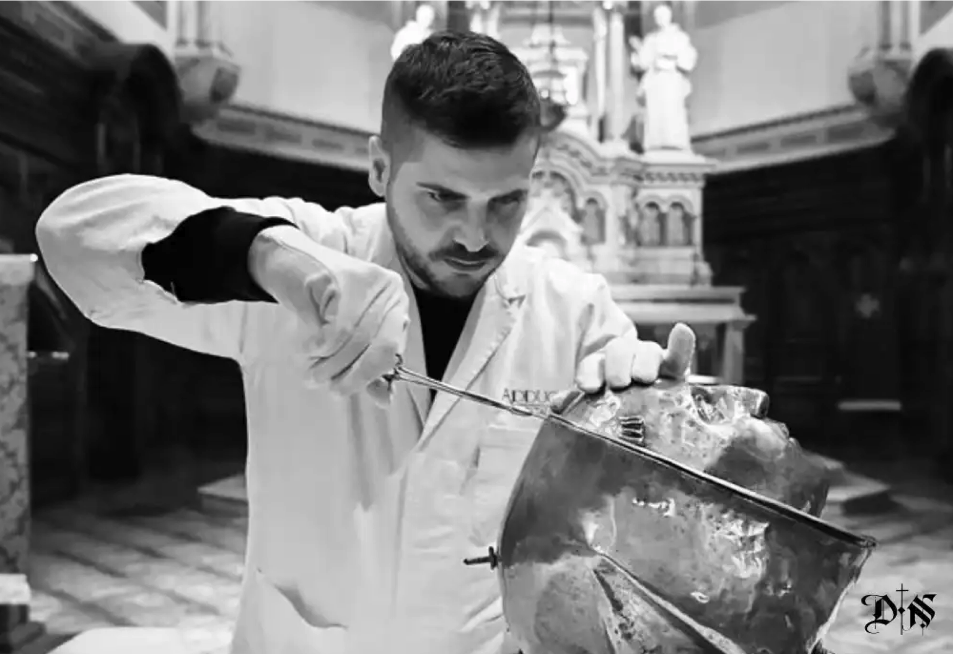
Transfer of the Relics of St. Bruno of Cologne to a new reliquary.
[https://youtu.be/o4u9Skx-b9s?si=47f6k-8qqo1Idxjj](https://youtu.be/o4u9Skx-b9s?si=47f6k-8qqo1Idxjj)


 Autor
Autor