 Autor
Autor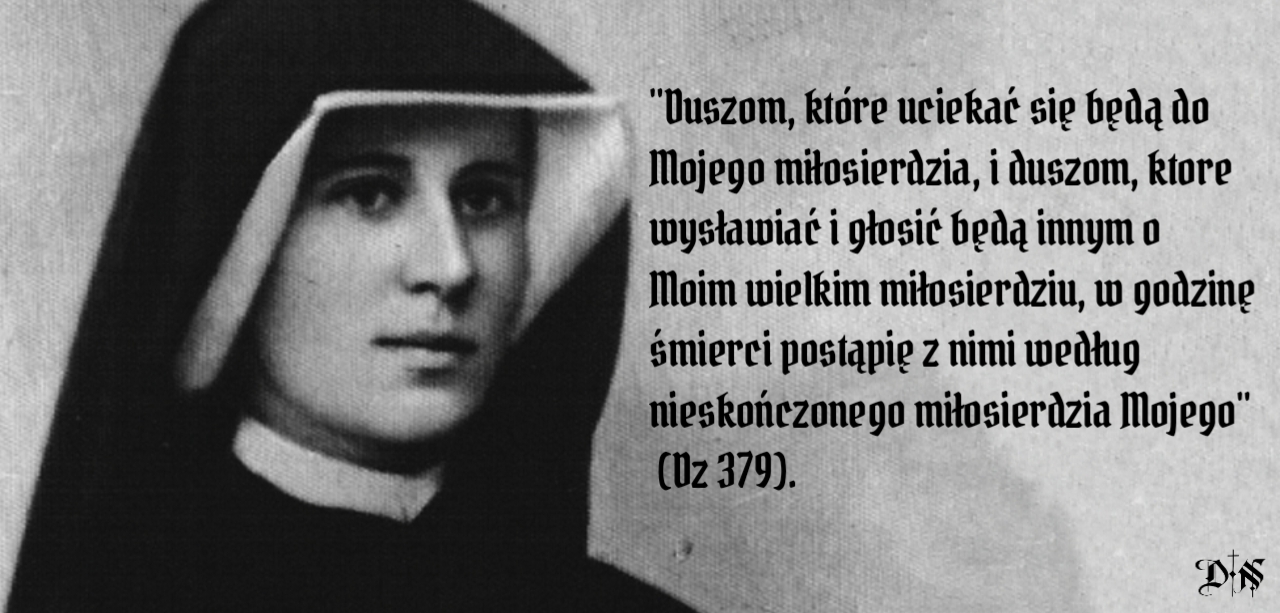
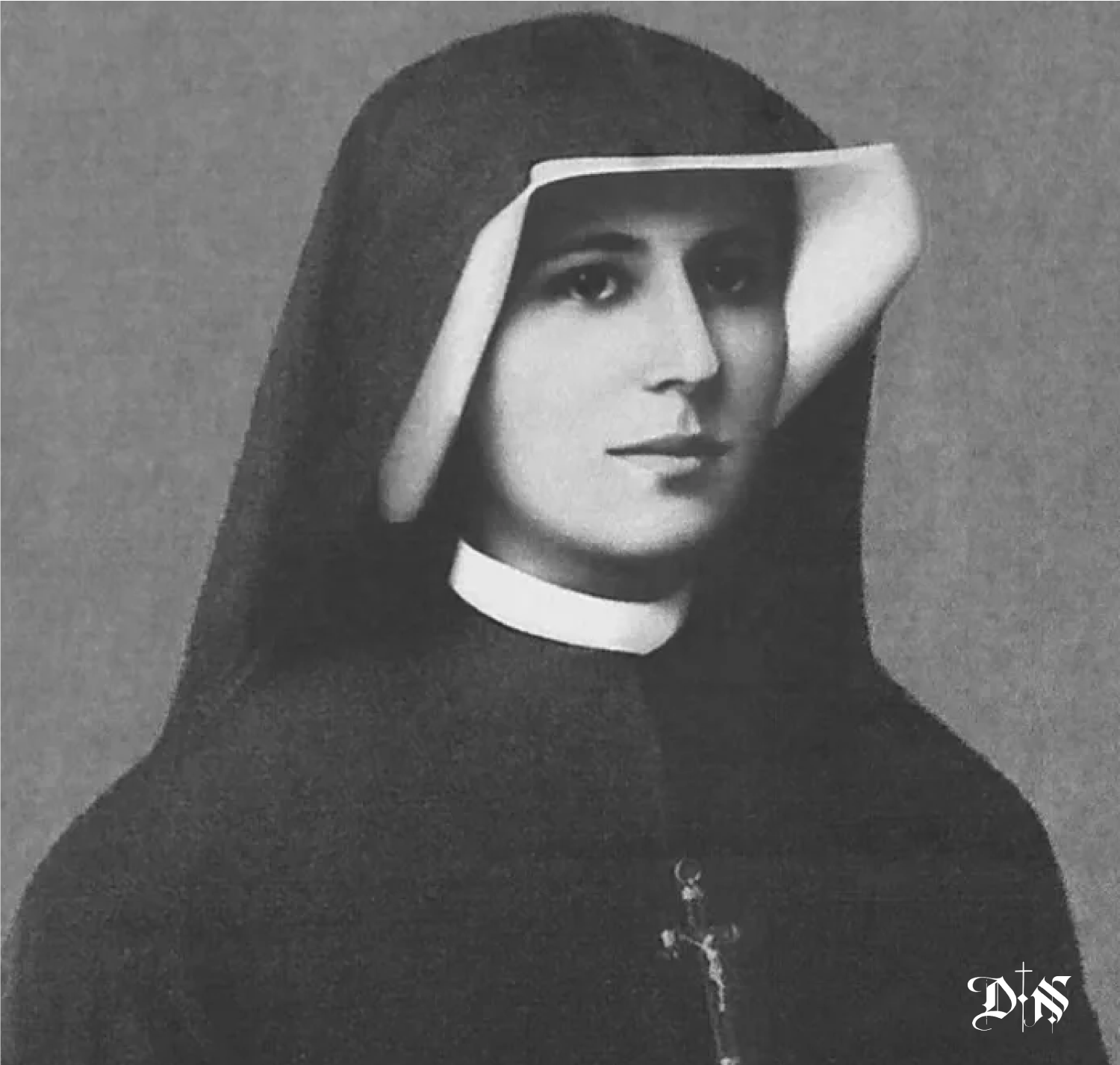
Saint Faustina Kowalska, also known as the Secretary of Divine Mercy, is one of the most significant figures in the history of contemporary Catholicism. Her life and mission had a tremendous impact on the development of the Divine Mercy devotion, which has found a place in the hearts of millions of faithful around the world.
We will examine Faustina’s life, her mystical experiences, and the influence she had on the Catholic Church.
Life of Faustina Kowalska
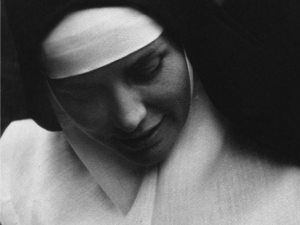
Faustina Kowalska was born on August 25, 1905, in Głogowiec, a small village in central Poland, as the third of ten children in a poor but pious family. Her baptismal name was Helena. From her earliest years, she was known for her deep piety and desire for religious life. At the age of 20, she joined the Congregation of the Sisters of Our Lady of Mercy, where she took the name Faustina. Faustina’s religious life was filled with simple, everyday duties, which she performed with great zeal and dedication. She worked as a cook, gardener, and gatekeeper in various houses of the congregation. However, it was not her daily duties that made her famous, but the mystical experiences she had throughout her religious life.
Mystical Experiences
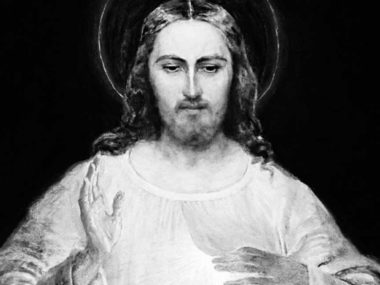
Faustina Kowalska was granted many visions and revelations of a mystical nature. The most significant of them concerned the apparitions of Jesus Christ, who appeared to her as the Merciful Savior. The first such apparition took place on February 22, 1931, in Płock, when Jesus appeared to Faustina in a white garment, with rays emanating from His heart. It was then that Jesus instructed Faustina to have an image painted depicting Him in this form, with the signature “Jesus, I trust in You.”
Diary
Faustina Kowalska recorded her mystical experiences in her “Diary,” which has become one of the most important spiritual documents of the 20th century. The “Diary” is a record of her visions, revelations, and inner experiences. It also contains prayers, meditations, and reflections on Divine Mercy. The message of the “Diary” focuses on God’s boundless mercy, which is ready to forgive even the greatest sins if only man turns to Him with trust.
Divine Mercy Devotion
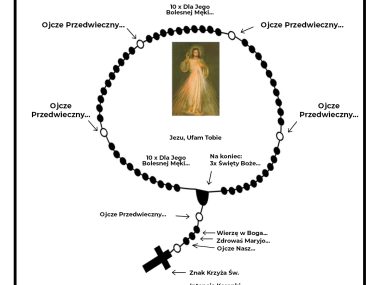
Thanks to Saint Faustina, the Divine Mercy devotion gained a new dimension and dynamism. In His apparitions, Jesus instructed Faustina to establish the Feast of Divine Mercy on the first Sunday after Easter, which was officially introduced into the liturgical calendar of the Catholic Church by Pope John Paul II in 2000. This feast is a day of special worship and trust in Divine Mercy. Additionally, Jesus gave Faustina the Chaplet to Divine Mercy – a prayer that quickly spread throughout the world. The Chaplet, recited on a rosary, is a simple but profound prayer in which the faithful ask for mercy for themselves and the whole world.
Canonization and Legacy
Faustina Kowalska died on October 5, 1938, in Kraków, at the age of only 33. Her life, though short, had a tremendous impact on the Catholic Church. In 1993, she was beatified by Pope John Paul II, and in 2000, she was canonized. John Paul II, who was a great advocate of the Divine Mercy devotion, called Faustina the “secretary of Divine Mercy.” Saint Faustina’s legacy lives on today. Her message of God’s mercy, conveyed in the “Diary,” is a source of hope and consolation for millions of people around the world. The Divine Mercy Sanctuary in Kraków-Łagiewniki, where Faustina’s tomb is located, has become one of the most important pilgrimage sites in Poland.
Saint Faustina Kowalska, as the Secretary of Divine Mercy, played a key role in conveying to the world the message of God’s boundless love and forgiveness. Her mystical experiences, recorded in the “Diary,” became the foundation of the Divine Mercy devotion, which gained international recognition and deep devotion among the faithful. Faustina is an example of a life completely dedicated to God, full of humility, trust, and zeal in proclaiming Divine Mercy. Her life and message continue to inspire and bring hope in difficult times, reminding us that God is always ready to receive everyone who turns to Him with trust.
I promise that the soul who honors this image will not perish. I also promise, already here on earth, victory over enemies, and especially at the hour of death. I Myself will defend it as My glory.
(Diary 48)
O gray and monotonous life, how many treasures you hold. No hour is like another. Grayness and monotony disappear when I look at everything through the eyes of faith.
(Diary 62)
God will refuse no one His Mercy. Heaven and earth may change, but God’s Mercy will never be exhausted.
(Diary 72)
Jesus, I trust in You against all hope, against all feelings I have within me that oppose hope. Do with me as You will, I will not depart from You, for You are the source of my life. (Diary 24)
God will refuse no one His mercy. Heaven and earth may change, but God’s mercy will never be exhausted.Divine Mercy. (Diary 72)
Let us beware of adding suffering to others, for this does not please the Lord… We allow ourselves to pass various judgments and speak where we should not repeat it sometimes.
(Diary 117)
Whatever I do, I do not rely on my own strength, but on God’s grace. With God’s grace, the soul can pass through the greatest difficulties victoriously.
(Diary 287)
You will not be alone, for I am always with you everywhere; do not fear anything at My heart (…) What do you fear? If you are with Me, who would dare to touch you? (Diary 797)
I am your strength, I will give you the power to fight. (Diary 1485)
Prayer of St. Sister Faustina
+ I desire to be completely transformed into Your mercy and to be a living reflection of You, O Lord; may this greatest attribute of God, His unfathomable mercy, pass through my heart and soul to my neighbor.
Help me to do this, O Lord, so that my eyes may be merciful, that I may never suspect or judge by appearances, but look for what is beautiful in the souls of others and come to their aid.
Help me, so that my hearing may be merciful, that I may incline to the needs of my neighbor, that my ears may not be indifferent to the pains and groans of my neighbor.
Help me, O Lord, so that my tongue may be merciful, that I may never speak negatively of my neighbor, but have a word of comfort and forgiveness for everyone.
Help me, O Lord, so that my hands may be merciful and full of good deeds, that I may only know how to do good to my neighbor, taking on heavier, more laborious work for myself.
Help me, so that my feet may be merciful, that I may always hasten to help my neighbor, mastering my own weariness and fatigue. My true rest is in serving my neighbor.
Help me, O Lord, so that my heart may be merciful, that I may feel all the sufferings of my neighbor. I will refuse no one my heart. I will associate sincerely even with those whom I know will abuse my kindness, and I myself will close myself in the most merciful Heart of Jesus. I will be silent about my own sufferings. May Your mercy rest in me, O my Lord.
Diary, 163

 Autor
Autor